10th February 2026
Just last week, Tony Walford, a partner at finance and M&A advisory firm Green Square Associates, told The Drum that “this year will certainly be the year of the indie.”
Walford’s not the only one making that prediction – one that’s based on continued struggles for some of the marketing world’s biggest networks and ensuing organisational shifts, the fruits of which are yet to be proven.
One of Walford’s more specific predictions is that independent agency groups may be increasingly able to cash in their agility, combined with the outsize impact of inter-agency collaboration to increasingly take work from major global incumbents in a trend that sees increasing bullishness for the rich constellation of formal groupings, informal collaborative agreements and everything in between that makes up the agency world’s bullish midmarket.
One of those growing independent groups is the London-headquartered Tomorrow, led by chair Tina Judic. Styled as a ‘collective,’ Tomorrow comprises AI creative studio Seed, search agency Found, data shop Braidr, intelligence platform Luminr and influencer marketing agency Disrupt.
Disrupt changes its complexion today with two announcements: a new managing director and a new subsidiary. Tomorrow has acquired qualitative research shop Imagen Insights, which will become part of Disrupt while its co-founder, Jay Richards, becomes Disrupt’s MD. Imagen co-founder Cat Agostinho will stay on to lead Imagen.
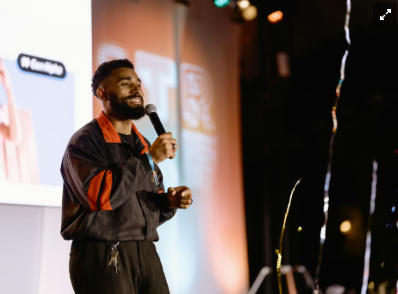
It’s a busy week for Richards; as he steps into his new role, he’s not at his London desk but in Doha, hosting the ‘marketing summit’ at the third annual edition of Web Summit Qatar (his responsibilities include hosting a couple of sessions moderated by The Drum). When he sits down with The Drum fresh from an overnight flight, he says it’s “interesting” having a boss again. “I haven’t had that for seven years.”
Who that new boss is is interesting. Not long ago, organisations like Imagen would have had one clear acquisition goal: a sale to one of marketing’s big six global networks. But that has changed; while the major holding companies still acquire agencies, they’ve been overtaken by private equity shops as the hungriest acquirers, with those independent groups also growing around the edges.
Richards agrees that the landscape has shifted in the seven years since he co-founded Imagen. “100%, massive acquisition by a huge organization was always the north star” in the early days of the business, he says. “But the interesting thing around the midmarket is, having your business acquired, you feel like you have a little bit more control. If you go to one of those larger organizations, you’re just going to get swallowed into the group… It’s like, ‘Welcome to the beast.’ It’s kind of like the Roman Empire.”
The alternative to the Roman Empire, Richards says, is a more collaborative approach. “There’s an element of, ‘We want to build with you,’ not just ‘Come in, we need your technology, we need your employees, we need your clients.’ It’s ‘What’s your vision? We want to build with you.’”
Imagen’s specialism is qualitative research – a panel of 37,000 people in 111 markets ready to be called upon for research rapidly, Richards says, and accessible by an online tool enhanced by AI Q&A. It’s that qualitative focus, he says, that differentiates the new-look Disrupt from an industry that often focuses instead on amassing reams of quantitative data and churning out content to replicable formulae.
“The problem we’ve got with a lot of brands is that we’ve pulled away from that real art of storytelling. We’re going, ‘Here are the four or five templates that we’ve got, we’re going to shove this down your throat, and you’re going to you’re going to enjoy it.’ It’s not the brand’s fault. From a platform perspective, we’ve designed this system where, OK, we’re all trying to get paid and, if we’re all going to get paid, here are the four or five ways that we need to do it to make sure we can all get everything we need out of it.”
The costs of that approach to digital marketing that gets everyone paid with familiar formats and approaches? We all get bored of it, Richards says. “The audience has pulled back from that and gone, ‘Yeah, we get it. We hear you. But everything looks identical. Now, it just feels like deja vu every time I watch a video.’ To get genuine influence, you need to enable the person watching the video to feel like they’re watching somebody who knows how to tell a story, watching somebody who knows how to build a world.”
And it’s qual, not just quant, that can get us to work that truly influences in a sustainable way, Richards argues. “The element of storytelling and world-building that creators can give at scale: that’s really rich and it’s qualitative. From a qualitative perspective, we understand what consumers want. If you understand what the consumer wants, then you can go, ‘OK, this is what the story should be around, here’s the initial idea, now go and build your world.’”
The hope of the new kind of agency group is to build a set of capabilities that can compete with larger incumbents, while weaponizing the agility of smaller scale. With this addition of consumer-grounded research into a wider group that’s going hard on AI, Richards says, Tomorrow hopes it has found its “silver bullet.” “Now, not only do we understand brands internally, but we have the consumer data to see what they’re saying before we do anything and do it quickly. It’s not just going, ‘We’re the smart people internally.’ We’ve got smart people, but now we’re also bringing the consumer into the room and bringing their voice to then be heard.”